Context
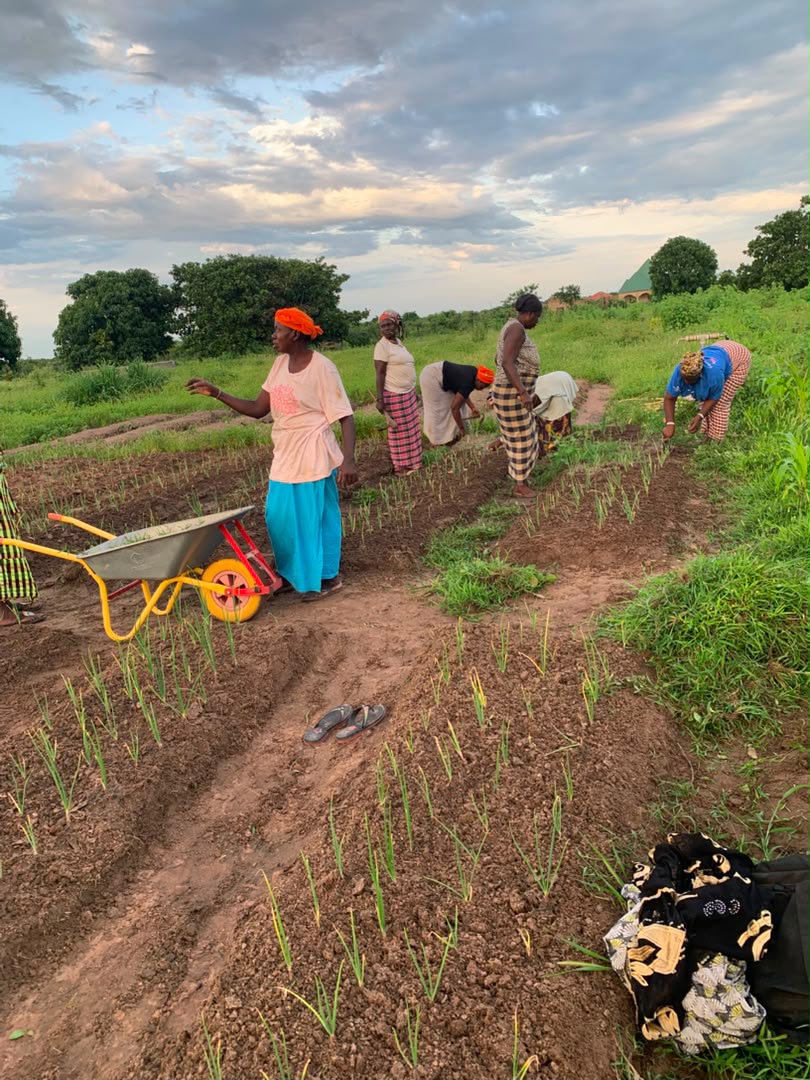
Many households in The Gambia face challenges in earning a stable and sufficient income. Women, in particular, often have limited access to finance, business skills and profitable market opportunities. As a result, many rely on small-scale trading activities, such as petty trading and food vending. While these businesses require relatively little start-up capital, they often generate modest returns. Increasing competition among businesses offering similar products can further limit their income potential.
To address these challenges, the Government of The Gambia, with support from the World Bank, is implementing the Resilience, Inclusion, Skills, and Equity (RISE) Project. Through its Productive Economic Inclusion (PEI) Programme, the government supports vulnerable households in establishing or strengthening income-generating activities. Participants receive a combination of livelihood grants, business skills training, coaching and access to community savings and loan associations.
Initial programme findings show that female participants are particularly concentrated in activities with limited income potential. To help beneficiaries move towards more profitable and sustainable livelihoods, a better understanding is needed of the profitability of existing activities, available market opportunities and the barriers entrepreneurs face..
Project goal and outputs
The aim of the study is to assess which income-generating activities offer realistic opportunities for profitability, growth and diversification.
The research combines beneficiary surveys, stakeholder interviews, focus group discussions and market analysis. Q-Point examines the revenues, costs and risks associated with different livelihood activities and identifies the barriers preventing women from accessing more profitable opportunities. The team also maps existing economic inclusion programmes and explores opportunities for stronger coordination and complementary support.
Building on these findings, Q-Point identifies promising opportunities in agricultural and non-agricultural sectors. For three to five selected activities, the team conducts an in-depth market systems analysis, examining market demand, access to finance, skills requirements, supporting services and social norms. This approach helps identify opportunities that are not only profitable in principle, but also accessible and feasible for vulnerable households.
Expected outputs
- Profitability and feasibility assessment: A report analysing the financial performance, risks and constraints of different income-generating activities, including a practical comparative framework for programme coaches.
- Productive inclusion and market opportunity assessment: An overview of existing support programmes, market saturation risks and promising livelihood opportunities, including an in-depth market systems analysis of selected activities.
- Consolidated report and implementation roadmap: Integrated findings and actionable recommendations to help programme staff guide beneficiaries towards more feasible and profitable activities.
- Validation workshop: A stakeholder workshop to discuss the research findings, validate conclusions and refine recommendations.
The findings will support the Gambian government in improving its entrepreneurship support and guiding beneficiaries towards more sustainable income opportunities.

Relevant Sustainable Development Goals (SDGs)
SDG 1 – No Poverty: The project identifies opportunities for vulnerable households to increase their income and strengthen their economic independence.
SDG 5 – Gender Equality: The research examines gender-specific barriers to entrepreneurship and identifies ways to improve women’s access to more profitable economic activities.
SDG 8 – Decent Work and Economic Growth: By identifying profitable and feasible livelihood opportunities, the project supports inclusive economic growth and stronger livelihoods.
SDG 10 – Reduced Inequalities: The project focuses on economically vulnerable households and supports more equitable access to markets, finance and entrepreneurship opportunities.

Involved organisations
Q-Point partners with the National Agricultural Research Institute (NARI), The Gambia’s national agricultural research institution. NARI contributes local expertise, research experience and established networks with government institutions, businesses and communities. The institute supports field research and the assessment of local socioeconomic and market conditions.
Commissioner
The World Bank supports the Government of The Gambia in implementing the Resilience, Inclusion, Skills, and Equity (RISE) Project. The assignment supports the Department of Community Development (DCD) in strengthening the PEI Programme.
Duration
September 2026 – February 2027
Curious to know more?
These Q-Point experts are involved and happy to talk to you:
Martine de Jong
Transition strategist agri-food chains
More about Martine
Feline Heussen
Consultant sustainable and inclusive agri-food chains
More about Feline
Olivia Ansenk
Consultant quality and food safety systems and sustainability
More about Olivia
Call us at +31 (0)317 491581 or send an email to info@q-point-bv.nl


